
No Hall County Three-Day Feed
Hall County has no official 72-hour release table in the sources reviewed. It also has no public recent-release archive. The county's Inmate Population List links to a current Sheriff-to-Citizen catalog and says the catalog updates automatically every 15 minutes. That cadence keeps current custody useful, but old entries do not remain available as a three-day history.
If someone appeared on Friday and is gone on Monday, the public list does not state when the change occurred. It also does not say whether the person posted bond, completed a sentence, received a court order, or moved to another custodian.
Review Hall County Three-Day Releases
A three-day check works best as a timeline. Start with the local jail, then search the source most likely to explain a change over the period.
- Search the current Hall County inmate catalog. Note whether the person remains listed, but do not assign a release reason from absence.
- Review the Hall County court docket for entries filed during the full period. Match the case and person carefully.
- Check saved Georgia VINE notices if notification was established before the custody change. A notice can narrow the event time.
- Search GDC when state-prison custody is possible. Its “Released In The Past 15 Days” filter covers state offenders, not the local jail population.
- Use BOP or ICE locators when federal or immigration custody is plausible. A match points to transfer or continued custody.
- Request the local release date, time, reason, and destination from the Sheriff's records custodian when other channels do not settle the question.
Use the Hall County 24-hour release process for a same-day change. The three-day method adds dated records that can bridge more than one business day.
Hall County Three-Day Record Fields
The public catalog settings checked on July 15, 2026 did not enable release date, time, or reason for public display. Those fields may exist in an agency record without appearing in the live catalog. Ask for them by name when written confirmation is needed.
| Needed field | Best official source |
|---|---|
| Person and booking number | Hall County jail record or a focused Sheriff's records response. |
| Exact release date and time | Jail release record; a VINE notice may provide a related custody-event time. |
| Release reason | Jail record read with the controlling court entry. |
| Releasing facility | Hall County Jail record or GDC record, depending on custody. |
| Transfer destination | Sending and receiving agency records, plus the relevant locator. |
| State discharge status | GDC Find an Offender, with GDC records for exact confirmation. |
Release and transfer must remain separate. A transfer changes the place of confinement. A community release ends that physical custody under the stated legal basis.
Hall Weekend Release Records
A 72-hour span is useful around weekends because court entries, jail processing, and public-record responses do not share one schedule. A court may enter an order, yet booking checks, bond work, warrants, holds, or transport instructions can affect when custody changes. The current list may refresh before a user sees the docket entry or obtains the jail record.
Holiday periods can extend the gap between an online clue and written proof. Georgia's three-business-day open-records response rule counts business days, not every hour in a rolling 72-hour period. An agency can state when records will be ready if they cannot be produced within that initial period.
Preserve the time of each observation. Note when the name was last seen, when it disappeared, when a court entry was filed, and when a notification arrived. Those points narrow the interval without inventing an exact release time.
Do not assume that a Monday docket view reproduces every step from the weekend. Orders, bond processing, release checks, and transport can occur on different clocks. If the exact sequence matters for a legal or personal record, request the filed order and the jail's release or transfer entry. Read the two together. The order shows the court's action, while the custody record documents how the jail carried it out.
Hall Court Records Explain Release
The Hall County Clerk docket can show Superior or State Court activity, while the county provides a separate Magistrate Court route. Court records may reveal a bond order, sentence, dismissal, or other disposition. They do not always show the moment jail staff completed release processing.
The official court appearances information notes that the jail transports people for first appearances, but family members must get future court-date information from the person because jail staff do not provide it.
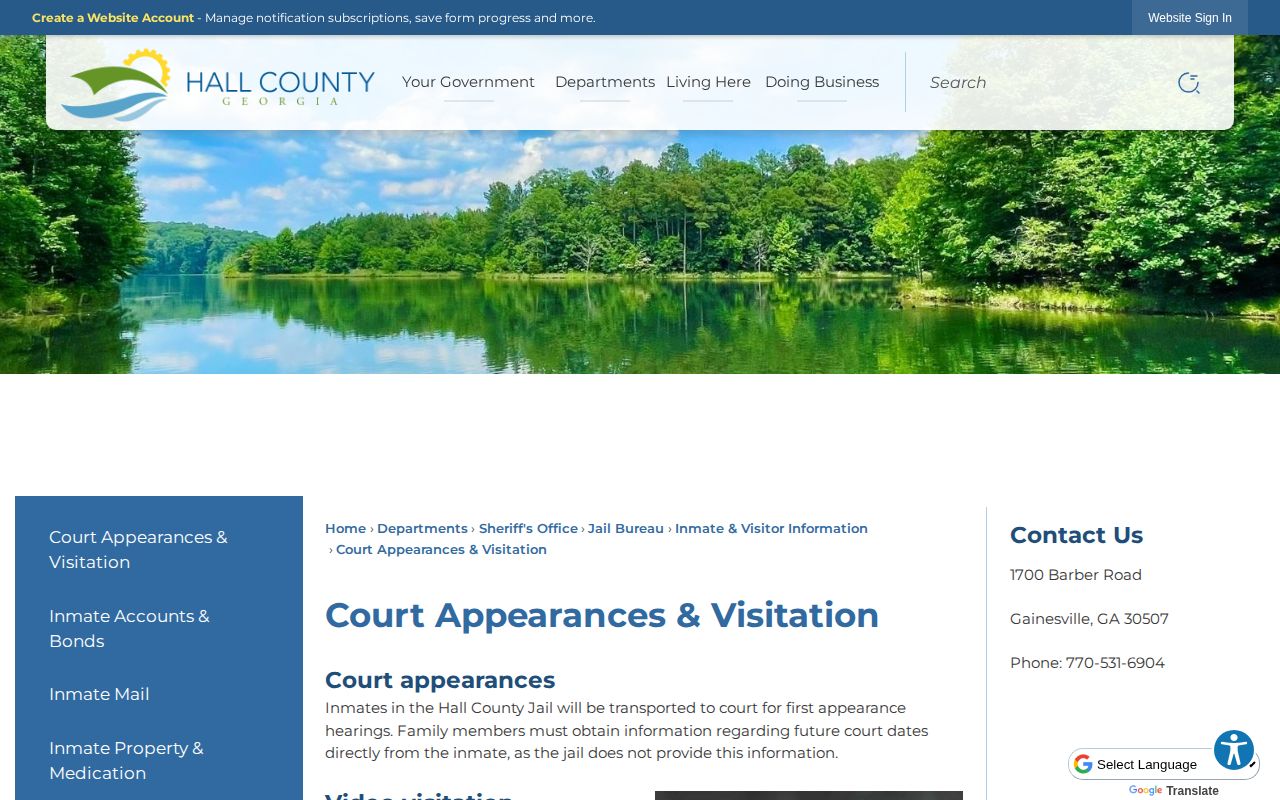
The source shows why the court and jail are distinct. The court controls its orders; the jail documents custody processing and physical departure.
First appearance is also different from final disposition. A hearing may set bond or address initial custody without ending the case. Later entries can change conditions, resolve charges, or impose a sentence. Match the case number and filing date across the full 72-hour period. When the docket only supplies an index, obtain the actual filed document from the Clerk before using it to explain a custody change.
Hall Releases Beyond County Jail
The GDC Find an Offender search includes a sentence-status option for people released in the past 15 days. That is a statewide corrections result. It is not a Hall County Jail release feed, even if a person has Hall County ties.
Federal custody requires the BOP Inmate Locator. Immigration custody requires the ICE Online Detainee Locator and, when needed, an ICE field office. A Hall County transport to one of those systems is a transfer, not proof that the person entered the community.
| Custody path | Three-day check |
|---|---|
| Hall County Jail | Current list, court docket, VINE history, Detention Center, and Sheriff's records. |
| Georgia state offender | GDC offender search, GDC records, and parole status where applicable. |
| Federal custody | BOP locator and agency records. |
| Immigration custody | ICE locator, field office, and originating jail record. |
GDC's released-in-the-past-15-days filter can be helpful when the three-day interval falls inside that larger state window. Still, a state result may reflect discharge from a GDC facility or another state status, not release from Hall County Jail. Confirm the facility and GDC number. If no state result appears, that does not prove local release, because not every Hall County detainee enters the state corrections system.
Request Hall County Release Proof
The Hall County Sheriff's open-records form is the direct written fallback. Identify the person and booking period, then ask for the release or transfer record and the specific fields needed. A narrow request can include booking number, release date and time, release reason, releasing facility, and transfer destination if recorded and releasable.
Detention Center staff at 770-531-6904 handle status questions not answered by the list. Phone information is useful for a prompt check, while a records response is better lasting proof. If VINELink registration existed before the event, retain the notice and compare it with the final agency record.
Ask for records from the smallest useful period. A request covering a named person and a three-day span is easier to match than a demand for an undefined release list that Hall County does not publish online. If the response identifies a transfer, follow the receiving agency's locator and records office. If it identifies a community release, compare the stated reason with the court action. This produces a clear chain from the last local custody entry to the confirmed outcome.
The broader Hall County released inmate search helps locate one named person across local, state, federal, and immigration systems. For a three-day list intent, keep the date range fixed and document each official source checked.
A complete three-day note should name each source and its coverage. The Hall County list covers people currently shown at the local jail. The docket covers filed court activity. VINE reports custody-status events received from participating agencies. GDC covers state corrections, while BOP and ICE cover distinct federal systems. None should be stretched beyond that role. When results conflict, give priority to the agency that held the person at the time and ask it to clarify the release or transfer entry.
Retain confirmation in its original form when possible. Save the records response, note the call date and office, and keep the docket case number rather than relying on a search-screen summary. A later roster check cannot recreate an entry that has dropped from a current list. These simple records make the 72-hour reconstruction easier to review and reduce confusion between an online change, a court order, and the time of physical departure.